Travis Wright on The Fourth Web: what happens when AI agents start moving the money. The only keynote speaker who has worked across Symantec cybersecurity, VARA-regulated Web3, GENIUS Act era banking, and FX/CFD capital markets. One speaker, no panel required.
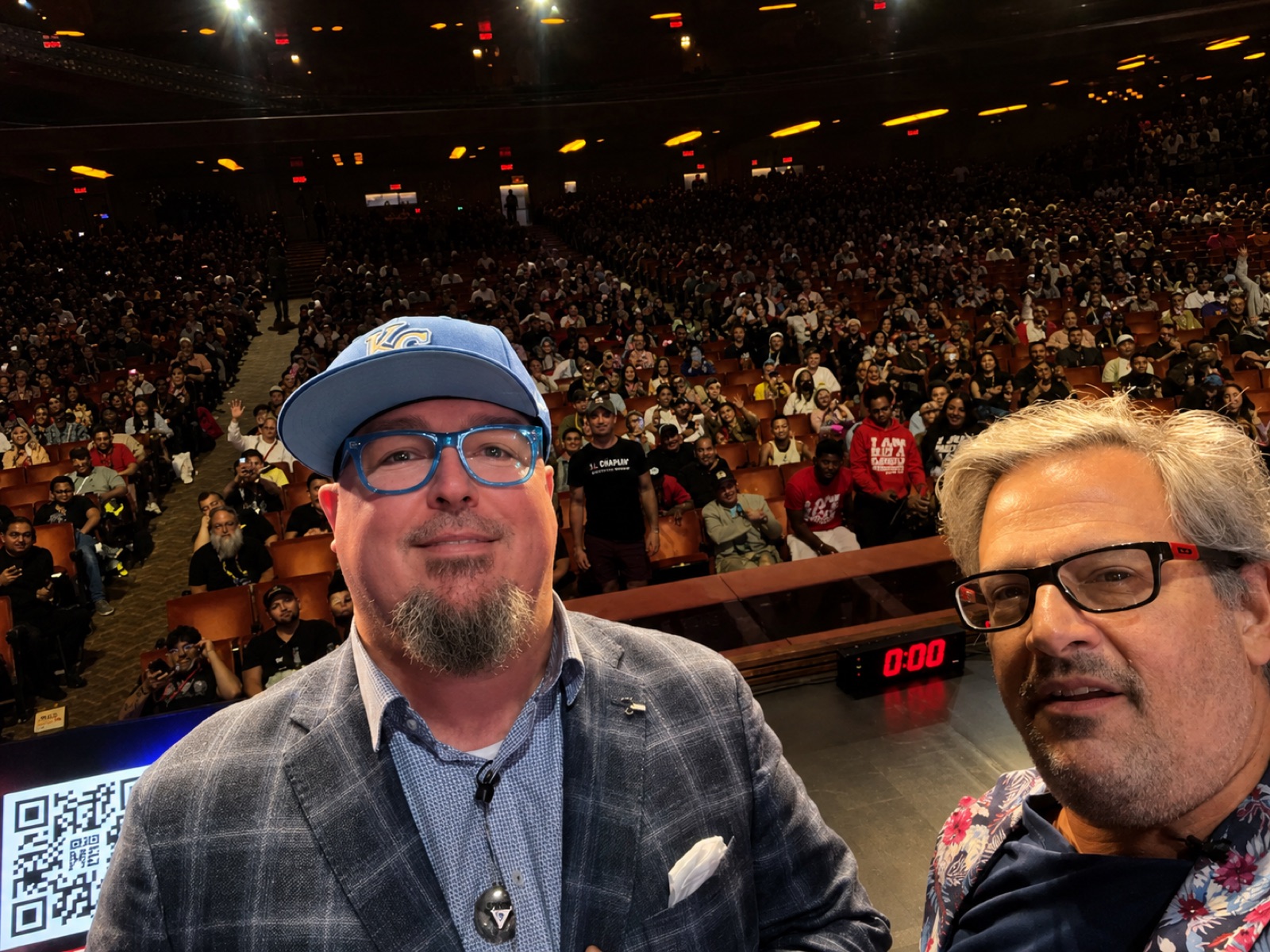
Radio City to Buenos Aires, CES to NBC. Drag the strip, tap a card, watch it in place.
The Fourth Web is the era of agentic AI commerce: machines autonomously initiating payments, contracts, and settlements. The GENIUS Act gave stablecoins a federal rulebook, so the rails are now legal, regulated, and moving. Every industry that touches money is about to meet a customer that is not human. The institutions that prepare early will set the terms; the rest will integrate on someone else's.
Static pages, one-way transmission. You consumed what others published.
Blogs, social, user-generated everything. The internet became a conversation.
Blockchain, digital assets, wallets. You could finally hold the deed to your digital life.
Autonomous agents act, transact, and build on your behalf, settling at machine speed in stablecoins.
Deep-linked for committee members in a hurry. Find your room; the talk is already built for it.
The GENIUS Act did not make stablecoins interesting; it made them inevitable. There is now a federal rulebook for dollar-pegged settlement, which moves the question from whether to whose balance sheet. Meanwhile AI agents are learning to initiate payments, negotiate terms, and reconcile accounts without a human in the loop. Your core systems were built for customers with fingers. The next hundred million accounts will not have any. I run this convergence inside a regulated financial group with 18 licenses and roughly $35 billion in daily volume, so this is not a theory deck. It is my Tuesday.
Agentic AI turns the policy lifecycle into software: quoting, binding, claims, and settlement negotiated between systems in seconds. Parametric products move on-chain, where payout is a contract condition rather than an adjuster's judgment call. And the convergence of agentic AI and blockchain creates an entirely new category of cyber risk that most carriers have not priced, because the actuarial tables have never met an attacker with an API key and infinite patience. I speak to this as an operator who worked the security side at Symantec and now works the digital-asset side at a VARA-regulated group, which is precisely the collision your cyber book is heading into.
Real-world assets are moving on-chain at institutional scale: funds, treasuries, real estate, commodities. Tokenization compresses settlement from days to seconds and turns custody into code. Now add agents that execute mandates autonomously, rebalance around the clock, and never call in sick. The Gulf is the live sandbox; VARA in Dubai and ADGM in Abu Dhabi wrote the rulebooks while other regulators wrote press releases. I keynoted RWA Summit Dubai 2026 and help run a VARA-regulated tokenization business, so the case studies are first-person.
Security teams are about to defend institutions where both the attacker and the customer are autonomous. Blockchain threat intelligence, stablecoin attack vectors, wallet-draining agents, and deepfake-grade social engineering are one product cycle from mainstream. Meanwhile the SOC itself is going agentic, because human analysts cannot triage machine-speed attacks. I started in enterprise security at Symantec and now operate inside a regulated digital-asset group, which is exactly the intersection most threat models are missing. Proof of Human is the talk about trust when nothing on the wire can be assumed human, and it lands hardest in rooms full of CISOs.
Fractional ownership, instant settlement, and programmable escrow are live in the market where I operate, and the playbook transfers.
Check availability →Tokenized commodities and agentic execution rewrite market microstructure, and MultiBank Group's daily volume is my lab.
Check availability →Named, productized, and customized per audience. Pick one and your committee has an agenda line; pick none and we build it on the discovery call.
What the GENIUS Act, stablecoins, and agent-initiated payments do to the business of banking, told by someone who runs the rails.
The macro thesis. Agents are a new class of participant in the economy, the first builders who are not human. Here is where the value pools form first.
The AI workflows that turn an ordinary team into power users, drawn from systems I actually run every day, not vendor demos.
When AI floods every feed and your attackers scale like software, trust becomes the scarcest asset on the internet. Here is how to defend it.
Enterprise and financial-sector threat modeling, from the inside.
Live RWA tokenization at MultiBank Group, not a whitepaper.
Author of the Web4 Banking Report for Diebold Nixdorf.
FX/CFD, derivatives, and tokenized asset distribution at mb.io.
Every audience gets material three or four of their peer speakers cannot produce from a single source. The insurance CISO hears blockchain threat modeling from a fintech practitioner. The sovereign wealth CIO gets an agentic AI thesis from someone who runs the product. The payments executive gets a cyber framework, a DeFi settlement roadmap, and a regulatory timeline in one talk.
Author of Wiley's Digital Sense, the 2018 CES Book of the Year. Co-host of The Bad Crypto Podcast: 800+ episodes, 1,000+ thought leaders interviewed. See the day job →
Every keynote starts with your audience, not his slides. A discovery call maps who is in the room and what they need to walk out ready to do.
The thesis stays; the examples change. Regulation, case studies, and vocabulary rebuilt for your industry and region.
Keynote, fireside, executive briefing, half-day workshop, virtual. Same speaker at closing dinner conversations as on the mainstage.
You get a promo clip, headshots, and bios in three lengths, and he promotes the event to his own audience across the podcast and newsletter.
A mic and a screen. No fog machines, no 14-page rider. The confidence monitor is appreciated but optional.
GCC events carry no travel line item at all. Everywhere else: he has 150+ stages worth of frequent flyer status.
Fees depend on format, region, customization depth, and whether an executive workshop is attached. Share your budget band in the inquiry form and you get an answer on fit within 24 hours. Events in Dubai and the GCC carry no travel costs because Travis Wright is based in Dubai.
Major conference mainstages book six to twelve months out. Corporate events can move faster. If your date is inside eight weeks, say so in the inquiry and it gets triaged first.
Yes. Travis Wright is based in Dubai and speaks worldwide, with 150+ keynotes delivered across the US, Europe, LATAM, Asia, and the Gulf.
Every engagement starts with a discovery call. The Fourth Web thesis stays; the examples, regulation, and case studies are rebuilt for the audience's industry and region. A banking audience and an insurance audience do not hear the same talk.
Yes. Keynotes, firesides, and executive briefings all run in virtual and hybrid formats with broadcast-grade audio and video from a dedicated studio.
Constantly. Travis Wright lives in Dubai, operates inside the VARA regulatory perimeter at MultiBank Group, and keynoted RWA Summit Dubai 2026. GCC bookings skip travel costs entirely.
A good AI keynote speaker for a banking or fintech conference needs operating credibility, not just stage polish. Travis Wright is Chief Innovation Officer of MultiBank Group, wrote the Web4 Banking Report for Diebold Nixdorf, and speaks on what agentic AI commerce does to payments, compliance, and core systems.
A microphone, a screen, and a confidence monitor if available. There is no complicated rider.
Yes. Organizers receive headshots, bios in three lengths, and a short promo clip, and Travis Wright promotes the appearance to his own audience across The Bad Crypto Podcast, The Signal, and his newsletter.
Recording rights are handled per event in the agreement. Most organizers get full internal-use rights, and public clips are agreed case by case.
Headshots, bio, the four signature talks, stage credits, and contact. One page, built to be forwarded to your committee without a login, a form, or a follow-up sequence.
Tell us the event and the room. You get a yes-or-no on fit, date, and fee, not a nurture sequence.